- Guess My Number activity (brute force vs smart guessing)
- Understanding inefficiency of linear search
- Introduction to step-by-step elimination
- Human simulation of search problems
- Building intuition for binary search
- 6 weeks
- 15, June, 2026
About Program
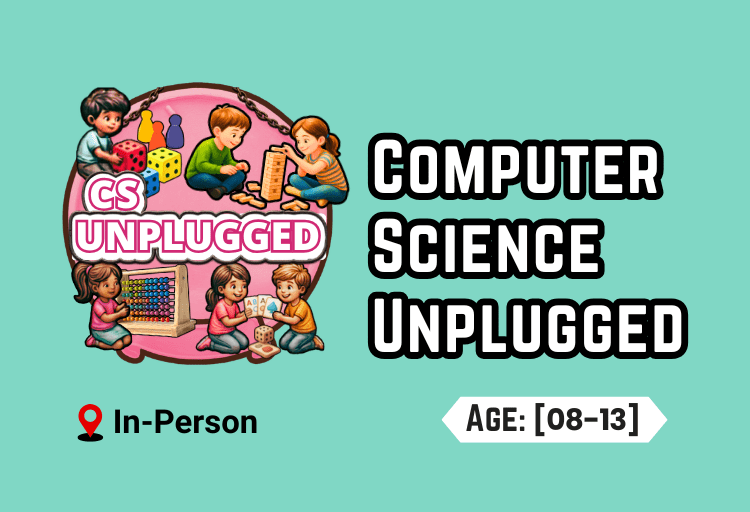
The Computer Science Unplugged course introduces students to core computing concepts without using computers through interactive activities and games. Students explore topics like algorithms, searching, and cryptography using hands-on puzzles and simulations. As they progress, they understand how computers think through concepts like binary search and divide and conquer. Collaborative challenges help build problem-solving, critical thinking, and communication skills. The course concludes with reflections and activities that connect these ideas to real-world computing.
In Collaboration with Information Technology University (ITU)
Course Outline
Lecture 1: Introduction to Searching & Guessing Strategies
Lecture 2: Binary Search & Logarithmic Thinking
- Binary search using physical splitting method
- Introduction to ternary search comparison
- Building Binary Search Tree (BST) with students
- Logarithmic vs linear growth understanding
- Second maximum using tournament method
Lecture 3: Cryptography & Secure Communication Basics
- Lion–Goat–Grass puzzle (constraint-based thinking)
- Understanding valid states and transitions
- State graph visualization of problems
- Introduction to secure communication ideas
- Building trust without shared secrets
Lecture 4: Designing Secure Protocols
- Story-based encryption (locked ring concept)
- Secure message exchange without key sharing
- Students design simple secure protocols
- Attack simulation on communication systems
- Understanding security vulnerabilities
Lecture 5: Exponential Growth & Patterns
- Multiplication as repeated addition
- Infection spread simulation (exponential growth)
- Paper folding thickness experiment
- Chessboard rice problem visualization
- Understanding rapid growth patterns
Lecture 6: Exponential Thinking Applications
- Doubling salary problem (A vs B comparison)
- Predicting exponential growth outcomes
- Teribethia truth-teller binary game
- Linear vs exponential comparison
- Real-world exponential applications
Lecture 7: Divide and Conquer Fundamentals
- Introduction to divide and conquer strategy
- Nuts and bolts matching problem
- Splitting problems into smaller parts
- Efficiency through recursive thinking
- Understanding problem decomposition
Lecture 8: Optimization Using Divide and Conquer
- Closest star problem (grid simulation)
- Majority element voting game
- Combining local results into global solution
- Reducing computational complexity
- Efficient problem-solving strategies
Lecture 9: Topological Ordering & Dependencies
- Understanding dependency-based systems
- Introduction to topological ordering
- Modeling problems using graphs
- Real-life dependency examples
- Ordering tasks logically
Lecture 10: Graph Problems & Pathfinding
- Shortest path in complex mazes
- Genome matching problem introduction
- Matching problems in graphs
- Understanding paths and connections
- Graph-based real-world applications
Lecture 11: Game Theory & Strategy Thinking
- Introduction to Nim game
- Finding optimal moves
- Predicting opponent strategies
- Thinking in decision trees
- Strategic algorithmic thinking
Lecture 12: AI Game Building & Final Challenge
- Building Tic-Tac-Toe AI
- Introduction to Gomoku (AI vs Human)
- Strategy optimization techniques
- Human vs AI gameplay analysis
- Final challenge and course wrap-up
🎓 Course Outcomes
- Develop strong logical thinking through searching, sorting, and optimization problems
- Understand key computer science concepts like binary search, divide and conquer, and graphs
- Build intuition for exponential growth and logarithmic thinking through real-world activities
- Learn how secure communication and cryptography systems work at a conceptual level
- Gain experience in problem solving using structured algorithms and game-based learning
- Understand strategic thinking through game theory and AI-based decision making
- Improve analytical skills by modeling real-world problems into computational structures
Nourishing the Programmer in you!
schoolofseedprogramming@gmail.com
query@seedprogramming.org