Seed Programming

About Program

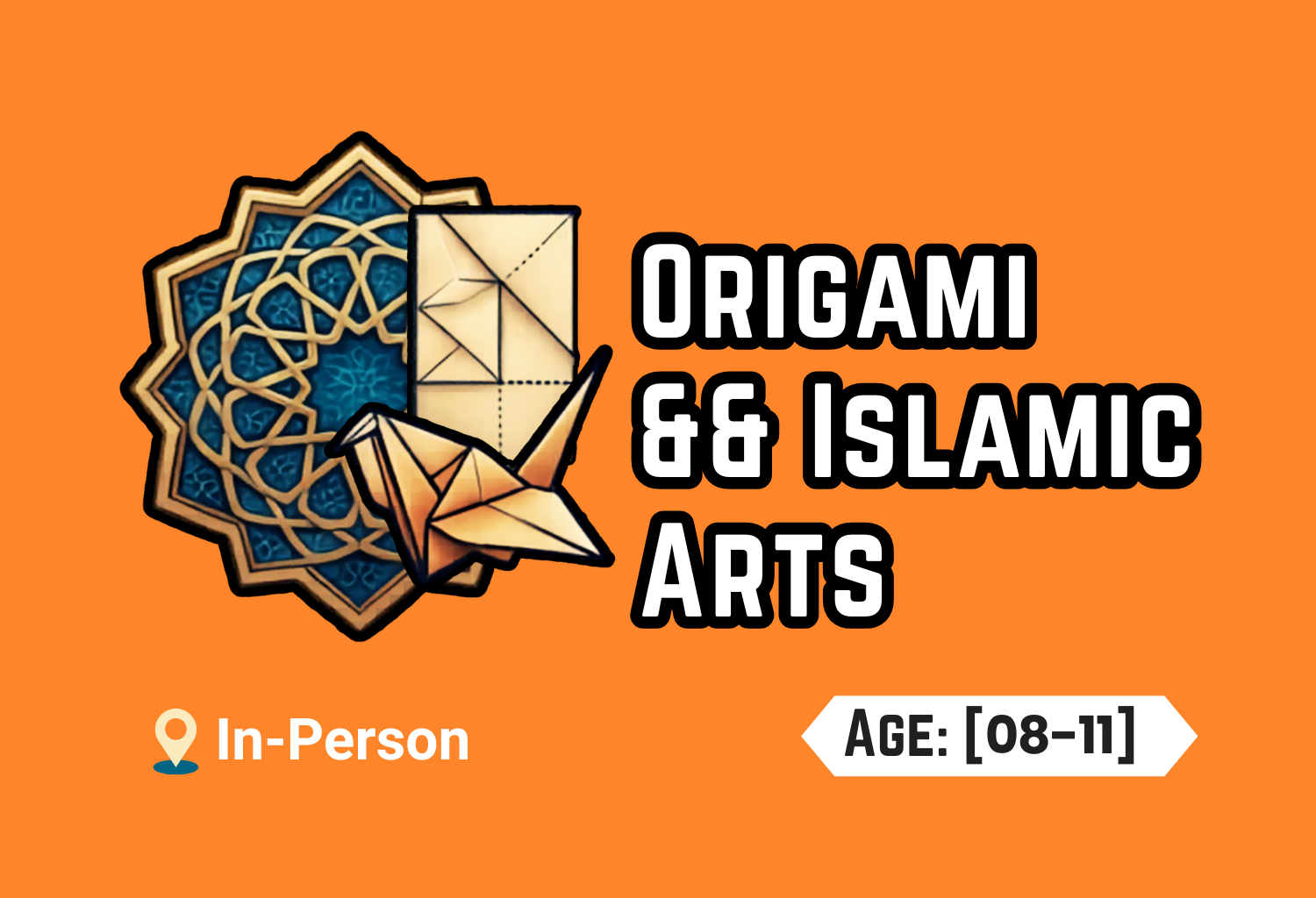
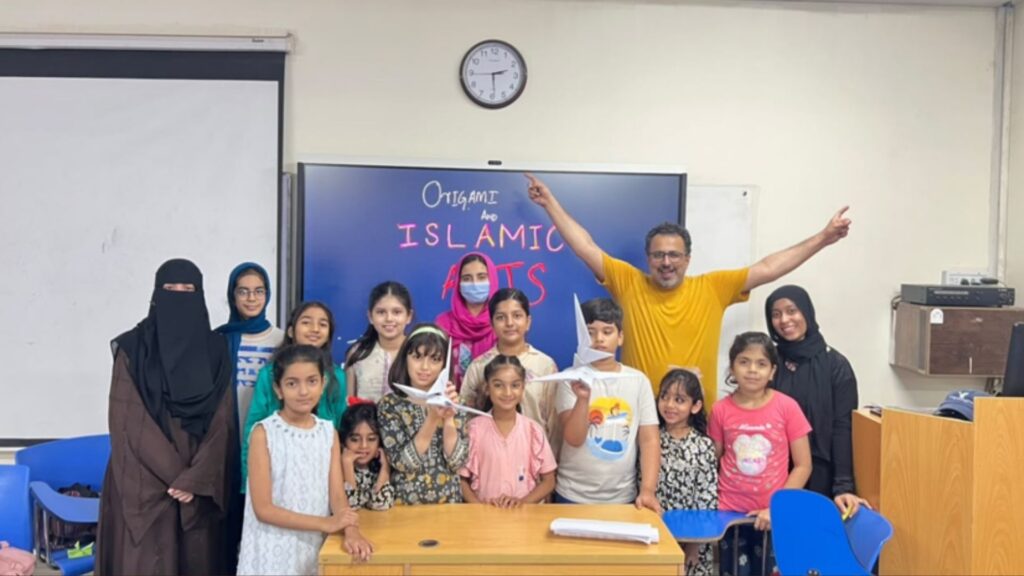
The Origami & Islamic Art course is designed to introduce students to creativity through structured paper folding, geometric construction, and traditional artistic patterns. Students begin by learning the fundamental techniques of origami such as valley folds, mountain folds, and basic crease control, then gradually progress toward more complex models including animals, modular structures, and 3D forms. Alongside origami, learners are introduced to Islamic art concepts such as symmetry, repetition, arabesque patterns, and geometric design inspired by historical civilizations. As the course advances, students create hands-on projects including origami models, geometric star patterns, mosaic-style designs, and decorative artworks. Through these activities, learners develop patience, spatial reasoning, precision, and artistic expression. The course concludes with a final showcase where students present their 3D lantern and modular creations, demonstrating both their technical skills and creative growth.

In Collaboration with Information Technology University (ITU)

Course Outline:

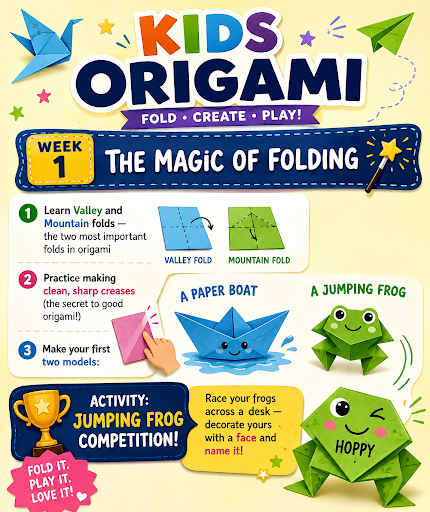
Week 1: The Magic of Folding
  • Lecture 1: Valley & Mountain Folds — Origami basics, notation symbols, crease control, first folding practice.
  • Lecture 2: Paper Boat & Jumping Frog — First models, squash fold introduction, functional origami competition.
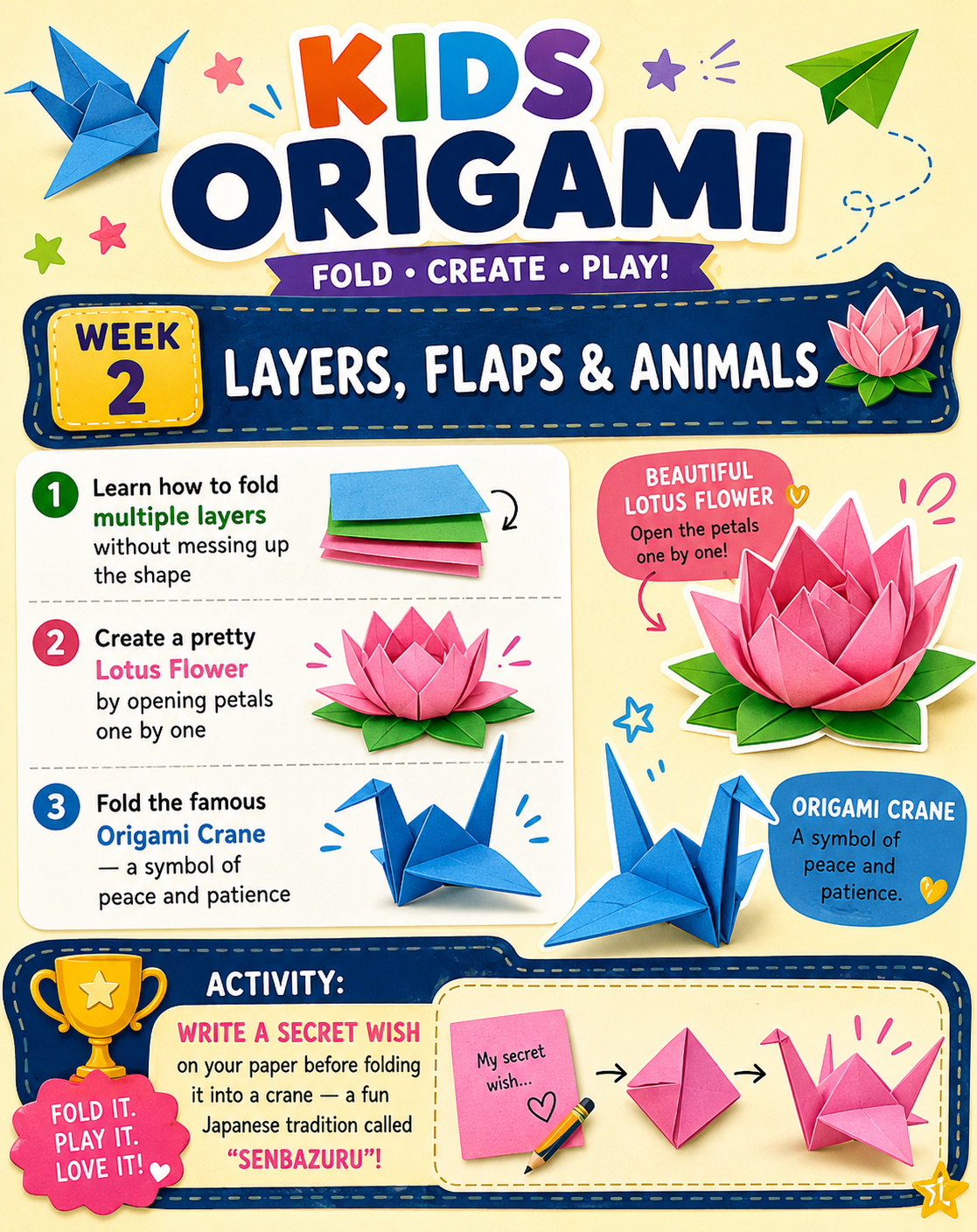
Week 2: Layers, Flaps & Animals
  • Lecture 3: Lotus Flower — Multi-layer folding, petal technique, symmetry & refinement.
  • Lecture 4: Origami Crane — Preliminary & bird base, Senbazuru tradition, patience in craft.
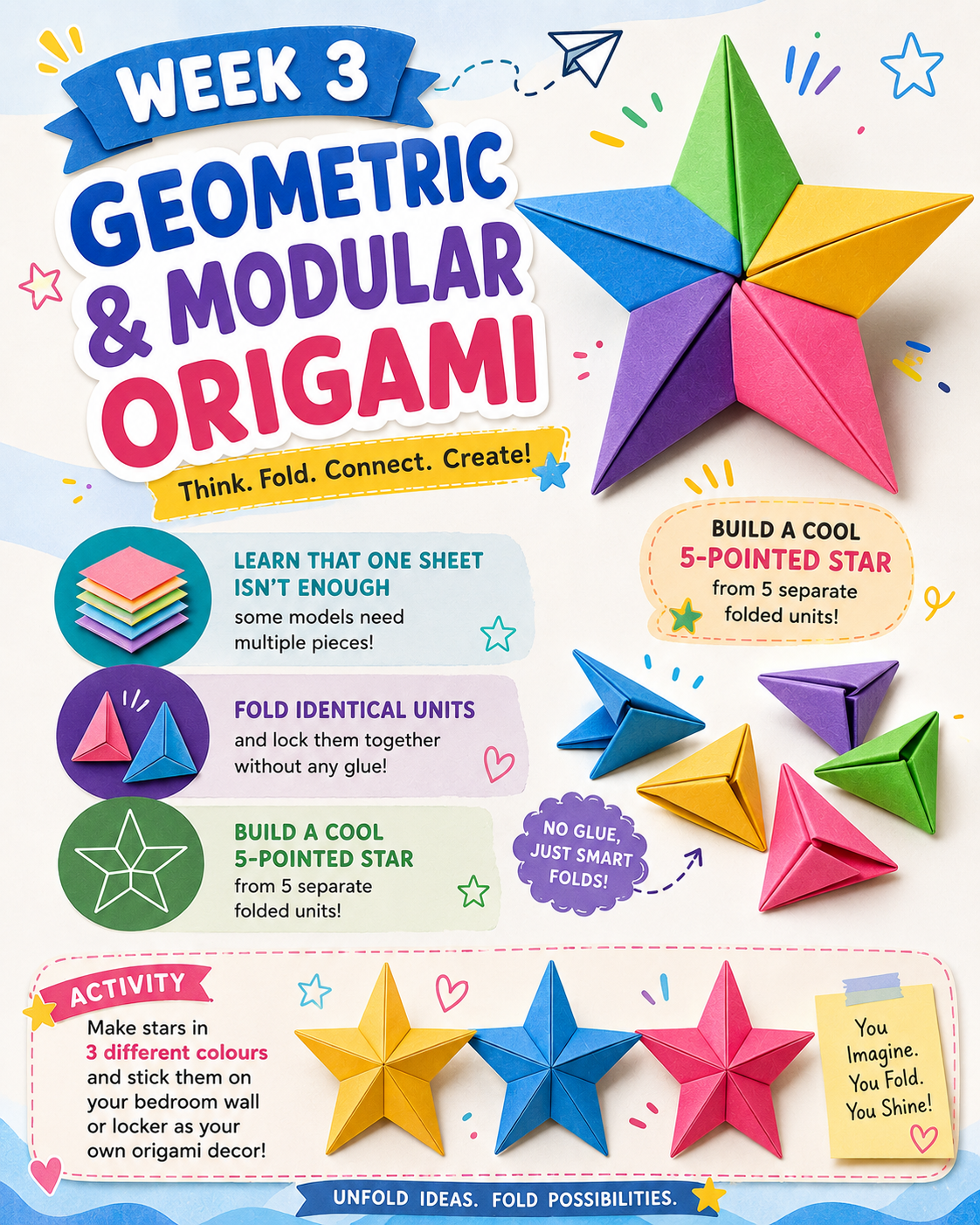
Week 3: Geometric & Modular Origami
  • Lecture 5: Modular Origami Basics — Units, interlocking system, 5-point star components.
  • Lecture 6: 5-Pointed Star — Assembly, colour design, modular décor project.
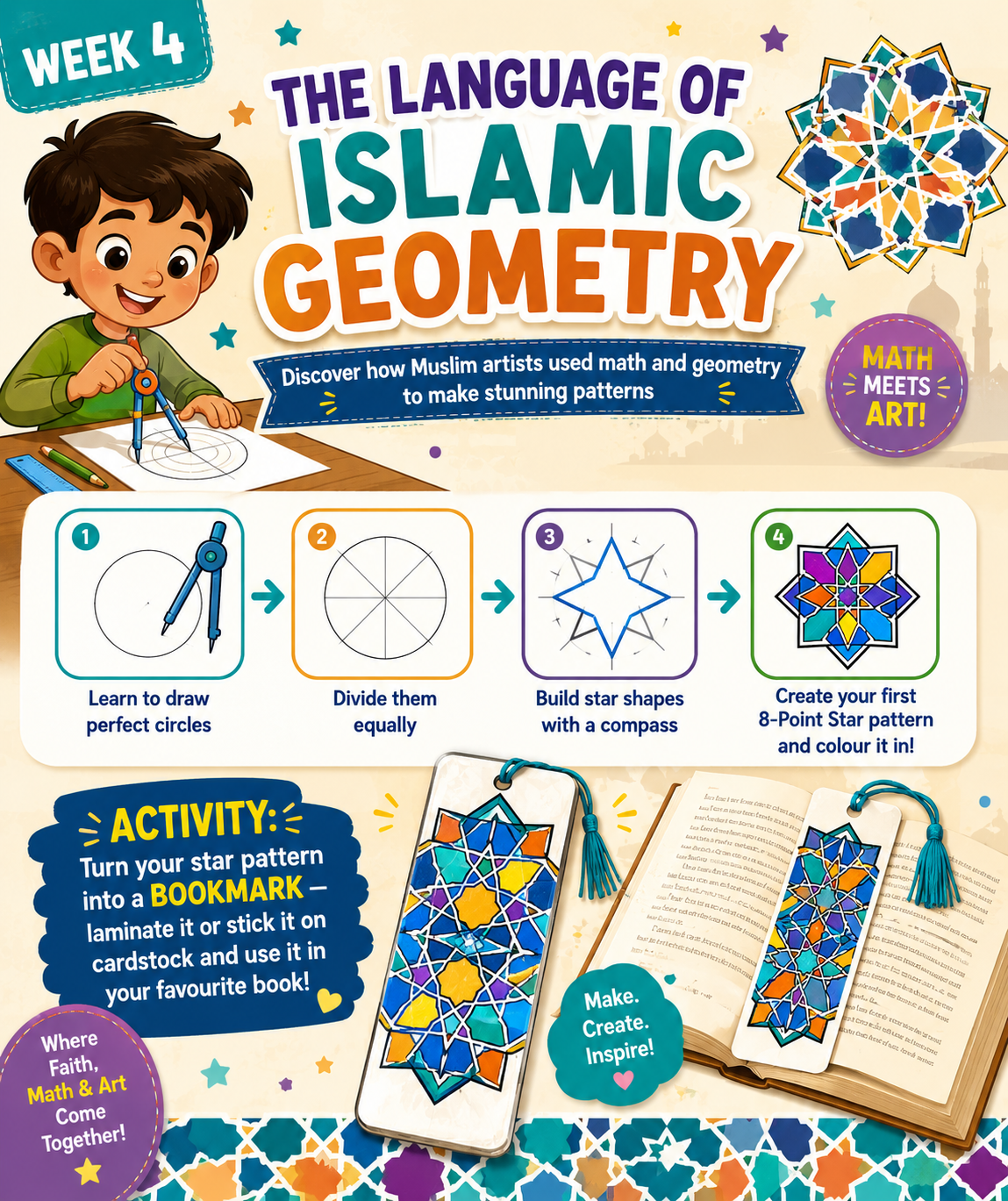
Week 4: Islamic Geometry
  • Lecture 7: Geometry as Art — Compass construction, circles, 8-point star design.
  • Lecture 8: Pattern to Product — Islamic star bookmark, colouring, lamination & craft.
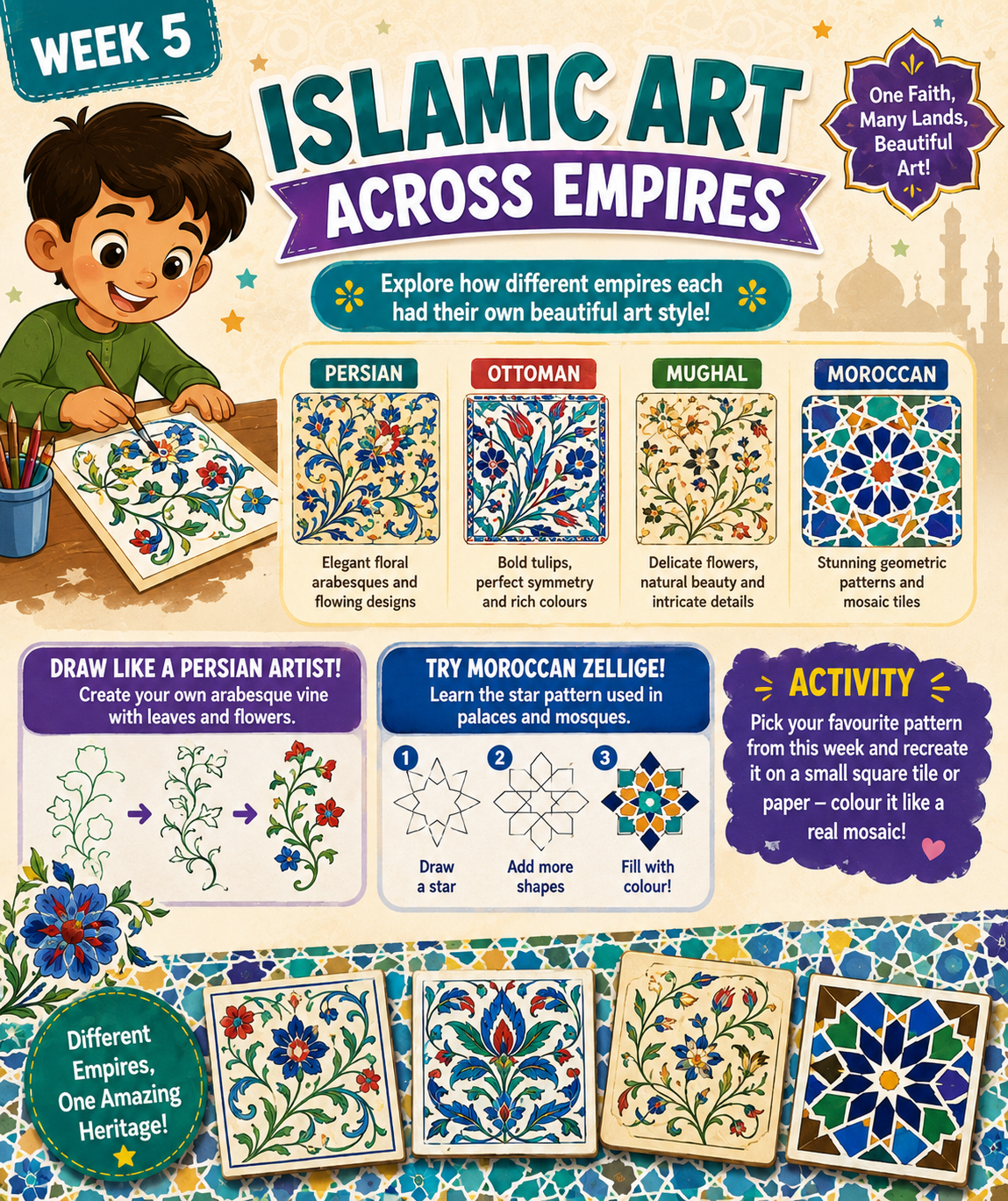
Week 5: Islamic Art Across Empires
  • Lecture 9: Arabesque Tradition — Persian vines, organic patterns, flowing design.
  • Lecture 10: Moroccan Zellige — Mosaic tiles, geometric assembly, regional styles.
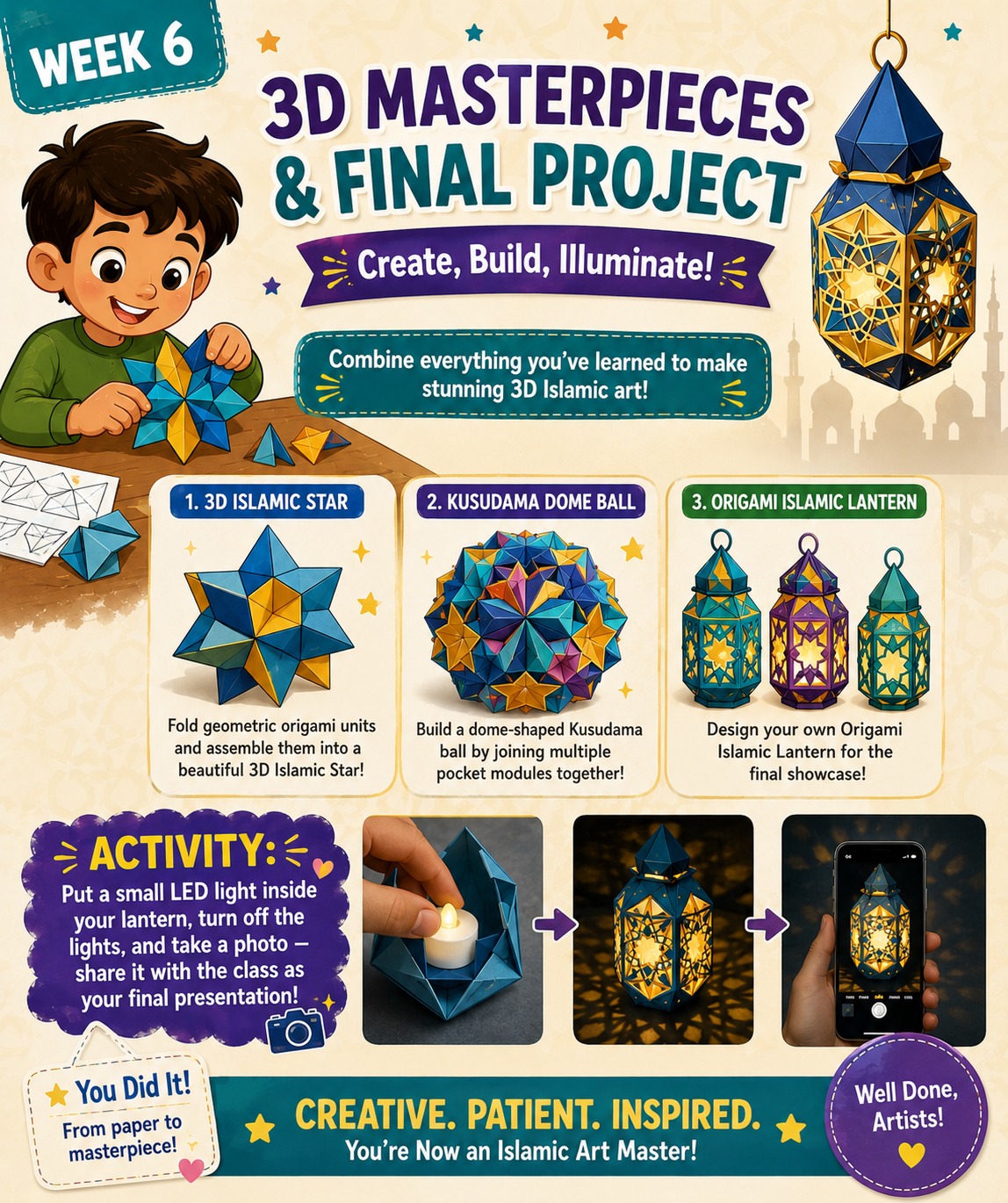
Week 6: 3D Masterpieces & Final Project
  • Lecture 11: Kusudama Ball — Modular 3D sphere, dome geometry, spatial construction.
  • Lecture 12: Islamic Lantern — Final project, geometric light design, showcase presentation.

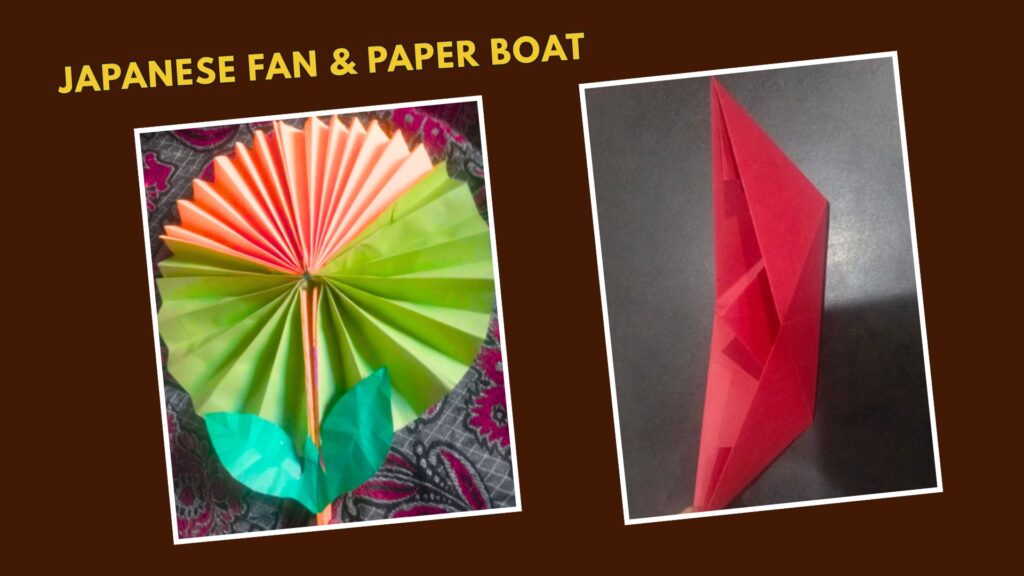
Lecture 1: Japanese Fan & Paper Boat
  • Valley & Mountain Folds — learned the two magic folds of origami: the valley fold (folding toward you) and the mountain fold (folding away from you).
  • Japanese Fan — folded a two-toned accordion fan using valley and mountain folds, then pinched and tied the centre to make it spread out perfectly.
  • Paper Boat — folded a sharp, sturdy paper boat shape, practicing clean corner folds and creasing.
  • Following step-by-step instructions — built focus and patience by completing each fold in the correct order.
  • Hands-on practice — repeated each fold a few times to build muscle memory and confidence.

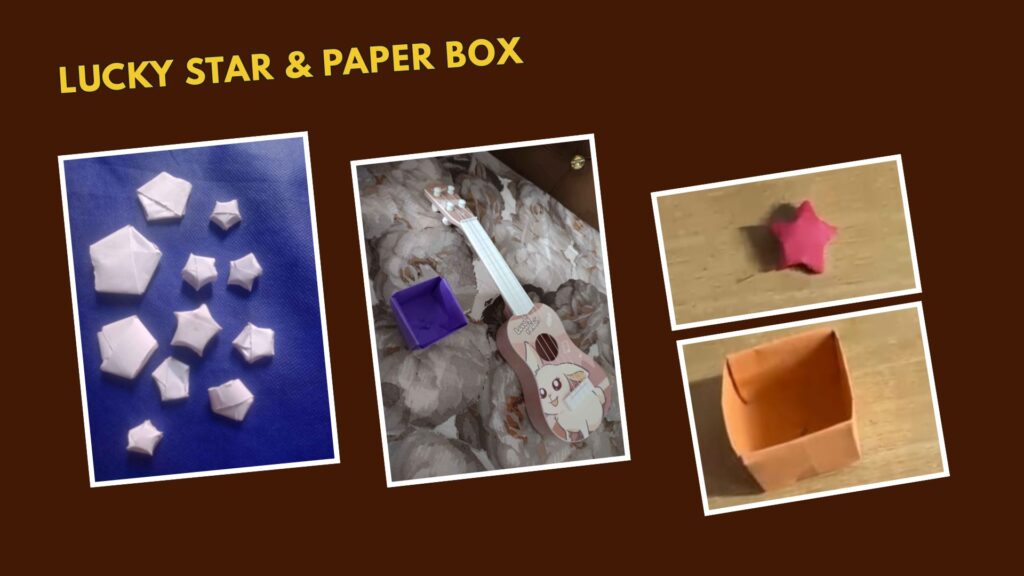
Lecture 2: Lucky Star & Paper Box
  • Lucky Star — folded the small traditional paper lucky star, a classic origami good-luck symbol, getting it to puff up into a soft 3D shape.
  • Paper Box — folded a simple, sturdy paper box from a single sheet, with neat flat sides and a clean open top.
  • Precision folding — practiced making sharp, even creases for a neat, professional-looking result.
  • Building on Lecture 1 skills — used the valley and mountain folds from the fan and boat, applied to new shapes.

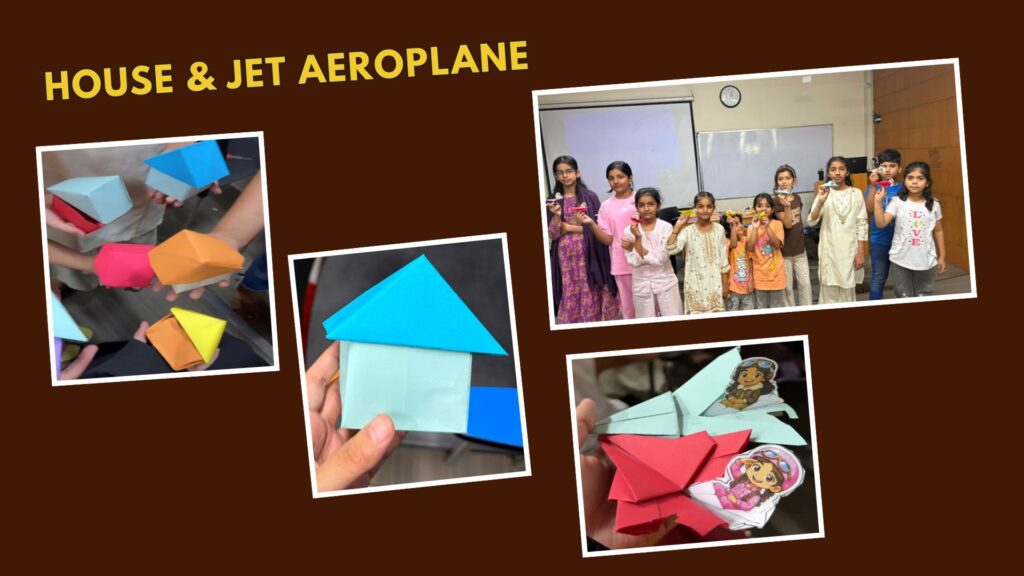
Lecture 3: House & Jet Aeroplane
  • Paper House — folded a simple house shape with a triangular roof and square base, just like a real little house.
  • Jet Aeroplane — folded a sharp, winged paper jet, decorating it with our own pilot character stickers.
  • Comparing fold types — explored how folding a “closed” shape (house) differs from folding a “flying” shape (aeroplane).
  • Testing our work — flew our paper jets to see whose folds worked best!


Lecture 4: Jumping Frog & F-16 Jet
  • Jumping Frog — folded a paper frog with a spring-like fold at the back, then practiced pressing down on its tail to make it hop!
  • F-16 Jet — folded a sleek, angled F-16 fighter jet model, focusing on sharp creases for a fast, stable flight.
  • Action origami — learned that some origami models aren’t just for display — they can move, jump, or fly when folded correctly.
  • Comparing techniques — explored how a “launch fold” (frog) differs from a “flight fold” (jet) even though both models are built for movement.
  • Testing our work — had a mini frog-jumping contest and test-flew our F-16s to see whose folds performed best